
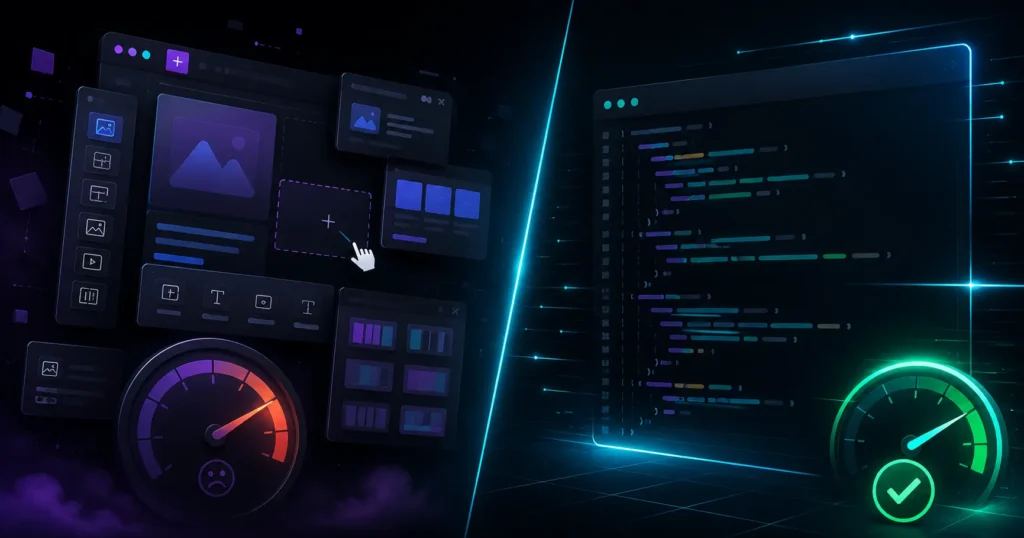
You need a website. You’ve heard WordPress is the way to go. But then you hit a fork in the road: do you let a developer use a drag-and-drop page builder, or do you invest in a custom-coded WordPress theme?
The difference isn’t just about technology — it’s about your business’s long-term growth, security, and profitability.
After 15+ years and over 400 websites, I’ve worked with them all:
Elementor Pro,
WPBakery,
Breakdance,
Bricks, and
Divi.
I know their strengths. But I’ve also been called in countless times to fix the hidden, expensive problems they create.
Here is the honest breakdown.
1. Speed: The 3-Second Rule That Kills Sales
Page builders generate a massive amount of extra code to give you that “drag-and-drop” flexibility. It’s convenient, but it comes at a cost: performance.
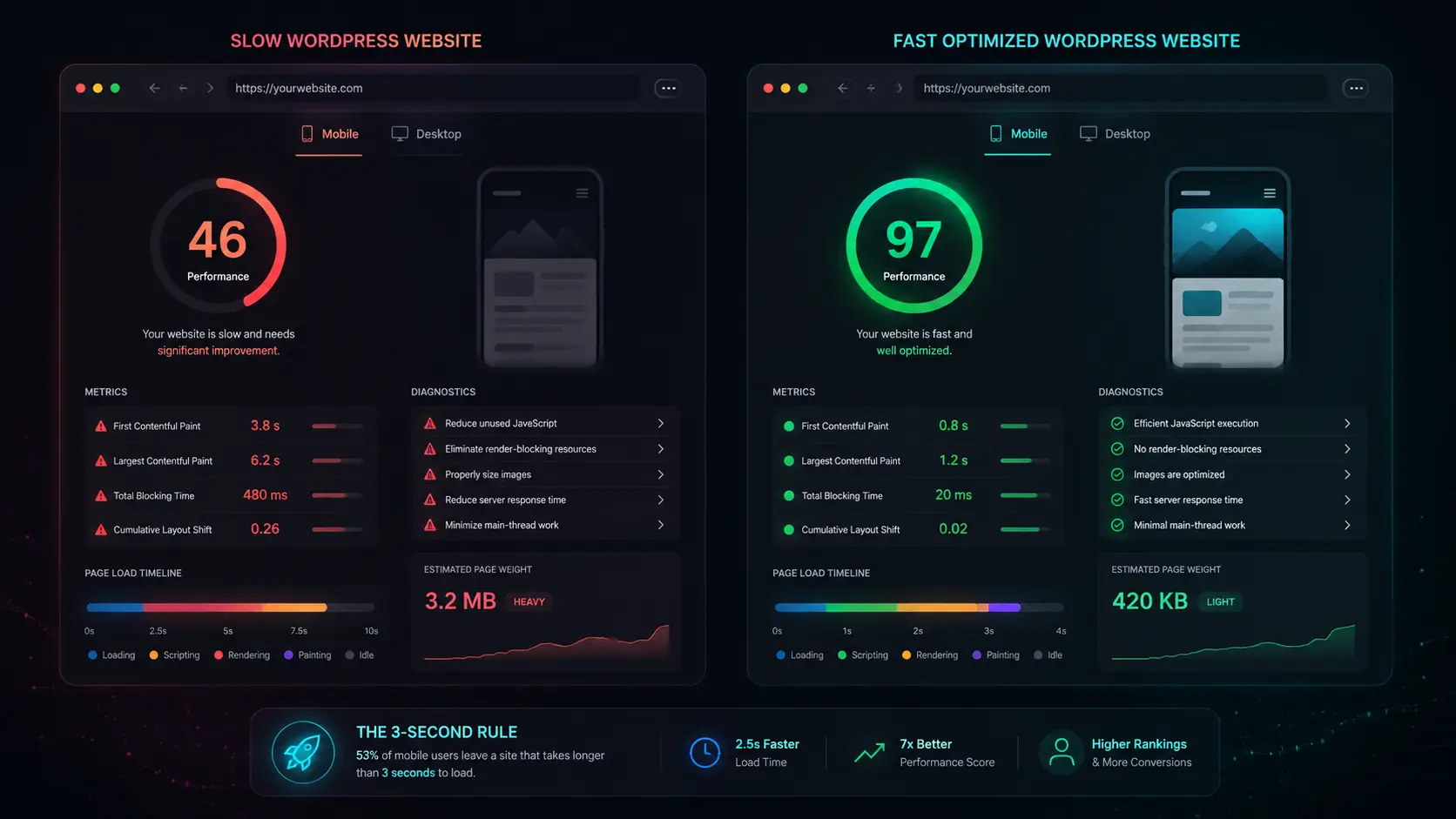
A typical page-builder site loads in 5-8 seconds. A clean, hand-coded site often loads in under 1.5 seconds.
A 1-second delay in page load time can drop your conversions by 7%. For a business doing $100,000 a month, that’s $84,000 a year left on the table.
Google’s Core Web Vitals don’t just affect SEO — they affect user behavior. A custom build removes roughly 90% of the unnecessary code, giving you a speed advantage that page builders simply cannot match.
2. The Maintenance Nightmare: Updates That Break Your Layout
This is the number one emergency call I get. A client updates a plugin or the page builder itself, and suddenly their homepage is a jumbled, broken mess.
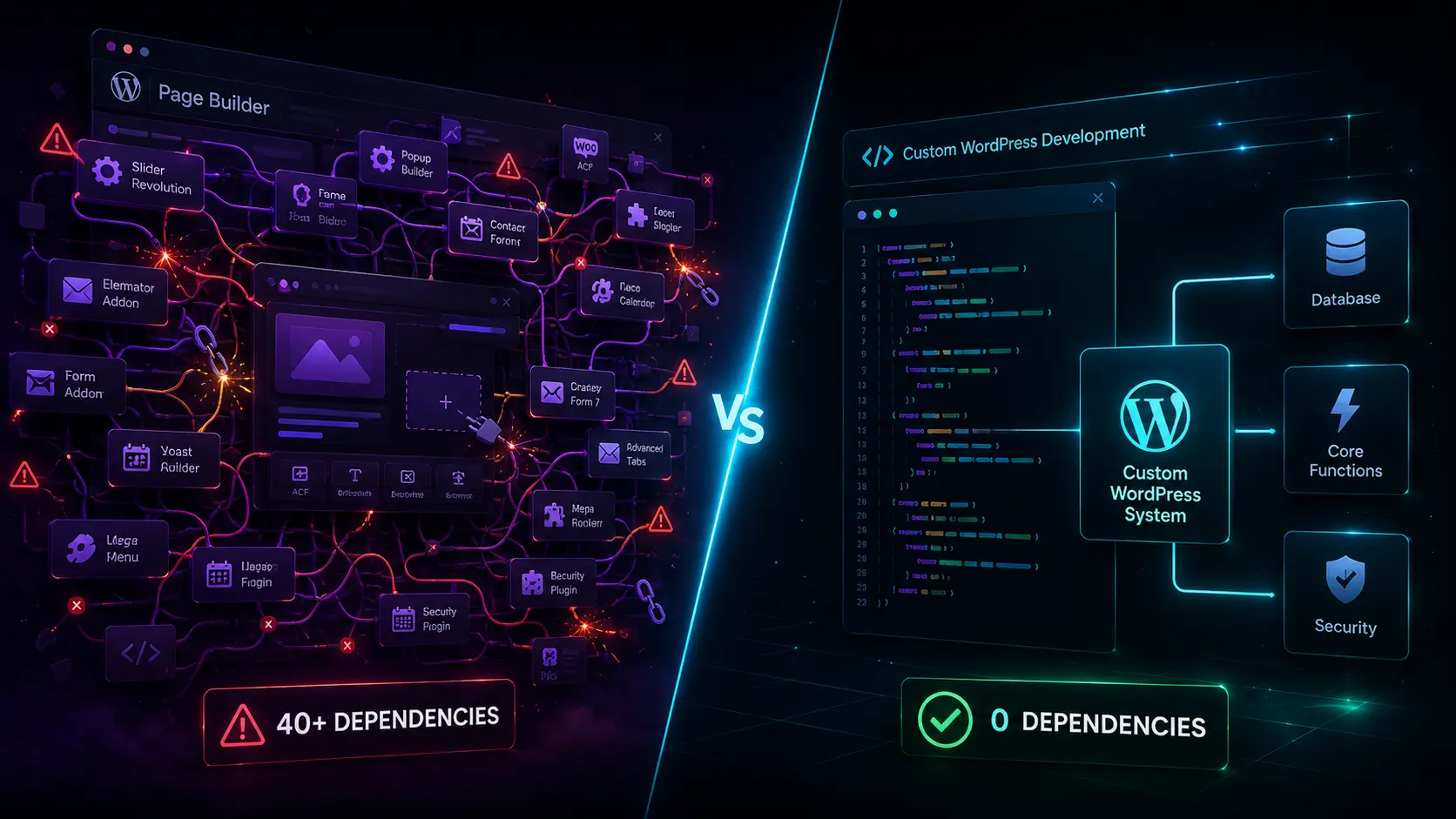
Why? Because page builders rely on dozens of third-party add-ons. A single update can cause a cascade of failures:
- CSS styles randomly disappear overnight
- Mobile layouts break unexpectedly
- Sections overlap or vanish completely
- Plugin conflicts take the entire site offline
A custom-coded theme has zero dependencies on a builder’s ecosystem. The code is streamlined. There’s nothing to randomly break. Your maintenance time and costs drop significantly.
3. The “Lock-In” Trap
Once your site is built with Elementor or WPBakery, you’re locked into that builder for life. You can’t simply disable it without losing your entire design. Try it — your content turns into a wall of incomprehensible shortcodes.
What lock-in really means for you:
- If the company hikes its prices, you pay or rebuild
- If development stops, your site is frozen in time
- If you want a cleaner, faster approach — full rebuild required
With custom development, you own 100% of your site’s code. It’s built on standard WordPress functions, so it’s portable, future-proof, and you’re not held hostage by any single vendor.
4. When Is a Page Builder the Right Choice? (Honesty Matters)
To be fair, I’m not saying page builders are evil. I still use Elementor Pro for specific clients who have internal marketing teams that prefer its visual interface.
A page builder might make sense if:
- You’re a solopreneur on a minimal budget and need to design every pixel yourself right now
- Your in-house marketing team absolutely needs drag-and-drop control
- You’re testing a business idea and need a temporary MVP
However, for a business serious about organic growth, conversion optimization, and long-term asset value, a strategic custom build is the superior investment.
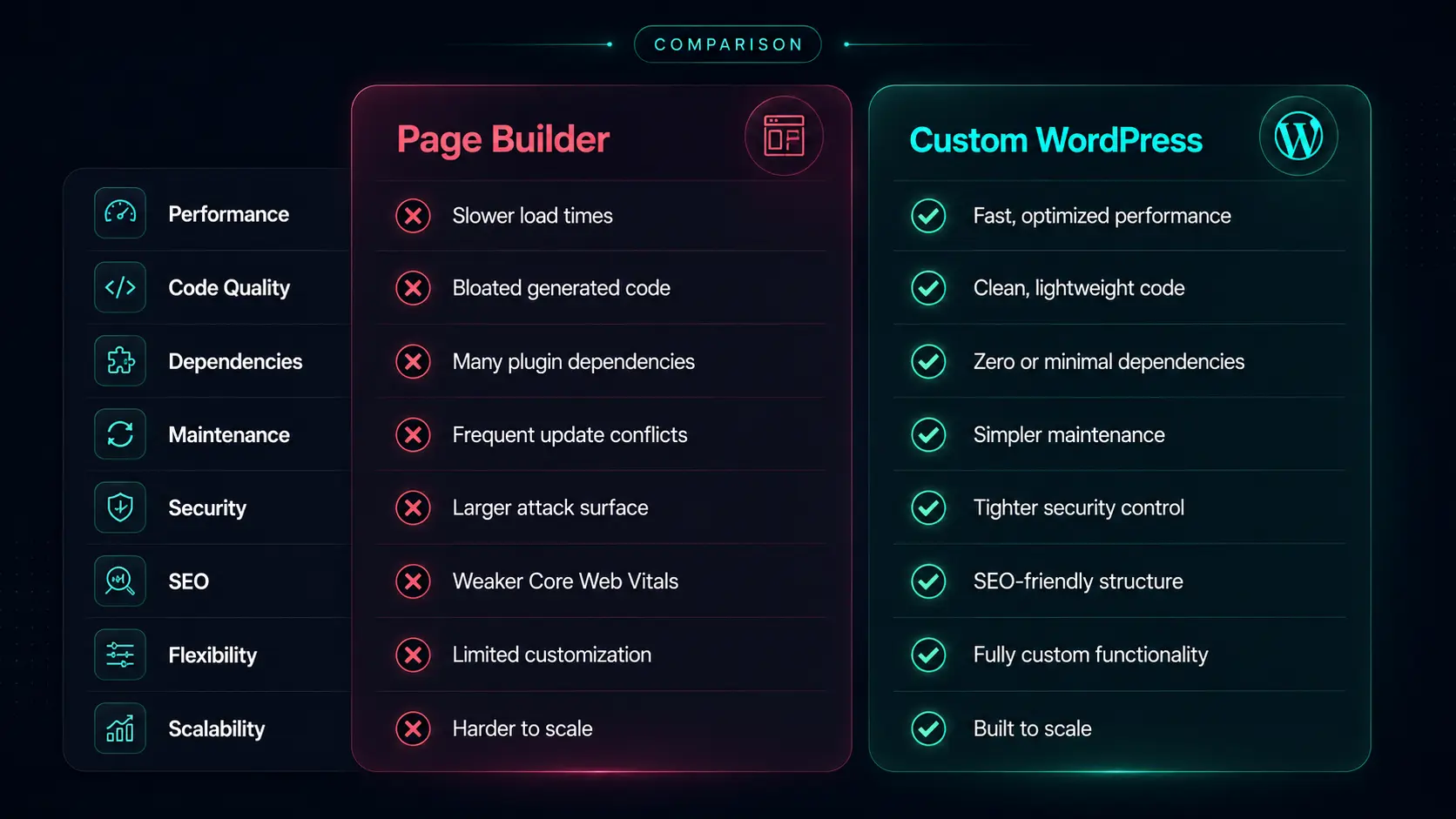
5. The Side-by-Side Comparison
Page Builder Approach
- 5-8 second load times
- 50+ plugin dependencies
- Vulnerable to update breakage
- Generic, template-based look
- Monthly subscription costs add up
- Locked into builder ecosystem
- Poor Core Web Vitals scores (40-70)
Custom-Coded Approach
- Under 1.5 second load times
- Zero plugin dependencies for layout
- Stable — built to last years
- Unique design for YOUR brand
- One-time investment
- You own 100% of the code
- Core Web Vitals consistently 95+
Conclusion: You’re Not Just Buying a Website
Choosing custom development isn’t just about avoiding bloat. It’s about choosing a partner who builds a growth tool — not just a website that sits there looking pretty.
A website is often your business’s most valuable digital asset. Treat it that way.
Thinking about a custom website — or need help fixing a page-builder disaster? Let’s talk. Free consultation, honest feedback, no obligation.